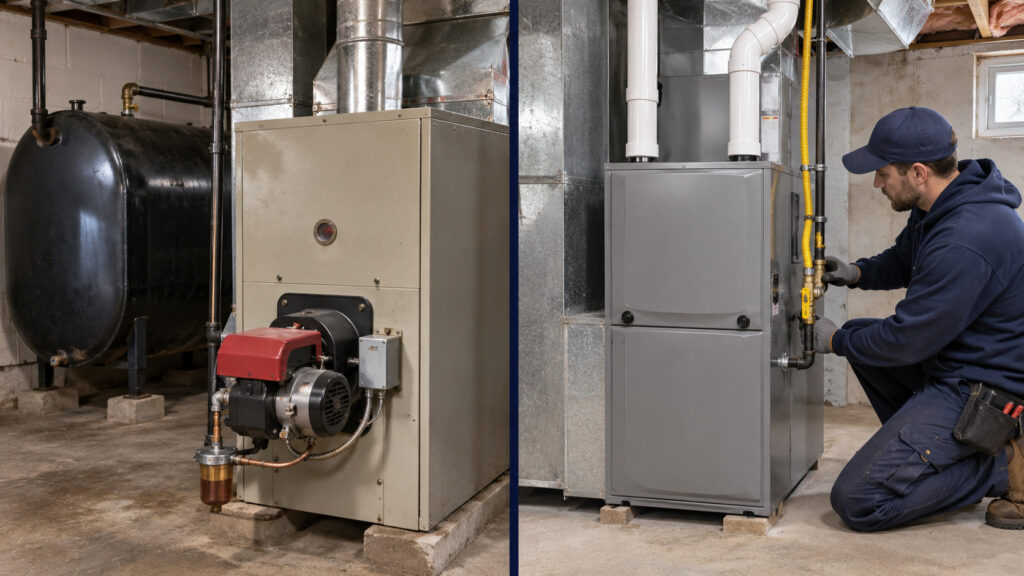
A gas main under the street does not make an oil-to-gas project simple. The house may still need a service connection, and the new furnace needs suitable venting. An old oil tank adds another decision.
The oil vs. gas furnace choice starts with what the property can support. Compare the complete project before you compare fuel bills. A repairable oil furnace may still serve a home well, even when a gas model looks attractive.
Oil Furnace vs Gas Furnace at a Glance
Both systems use forced air to carry heat through ducts. An oil furnace burns fuel from an on-site tank. A natural gas furnace receives fuel through a utility connection.
A local heating assessment can help establish whether the current system needs a repair. That gives you a useful starting point before a fuel change.
| What to Compare | Oil Furnace | Gas Furnace |
|---|---|---|
| Fuel supply | Tank with scheduled deliveries | Utility pipeline connection |
| Storage | Space for an oil tank | No on-site natural gas tank |
| Routine care | Burner service and oil system checks | Burner and safety checks |
| Replacement scope | May retain suitable oil infrastructure | May need a new utility connection |
| Seasonal costs | Depend on oil use and delivery terms | Depend on gas use and utility charges |
| Suitability | An option without natural gas access | An option where service is available |
How Do Oil and Gas Furnaces Heat a Home?
An oil burner sprays fuel through a nozzle so it can burn. A gas burner uses fuel from a controlled gas supply. In either furnace, a heat exchanger transfers heat to air that the blower sends through ducts.
Exhaust must leave through a suitable vent system. The supply air should remain separate from combustion gases. A technician checks these systems as part of safe equipment service.
A furnace differs from a boiler. Radiators or hot-water baseboards may mean your house uses a boiler, even if people call it a furnace. EZ Flow services gas and oil equipment, so describe how your home delivers heat when you request help.
Which Furnace Uses Fuel More Effectively?
AFUE means annual fuel utilization efficiency. It describes the share of fuel energy the appliance converts to useful heat over a typical season. A 90% AFUE model converts about 90% of that fuel input into heat at the appliance.
The rating does not describe the condition of the ductwork. It also does not show how much heat the house loses. Equipment with a higher AFUE rating can still serve a drafty house poorly.
Modern gas equipment includes high-AFUE condensing models. Oil models have different ratings by design. Compare actual model specifications rather than apply one rating to every furnace that uses the same fuel.
The DOE explains how direct-vent equipment brings combustion air from outside. This design also directs exhaust outdoors through a separate path. Ask which vent arrangement the proposed model needs.
Is Gas Always Cheaper than Oil?
Natural gas can offer lower fuel costs where the utility connection already exists. That does not establish savings for every property. Delivered oil rates and gas service charges both affect the result.
A BTU is a unit of heat energy. Avoid a direct comparison between a gallon of oil and a therm of gas. They contain different amounts of energy. A fair comparison accounts for fuel energy and the appliance’s AFUE.
The EIA’s energy conversion calculators help explain those different units. The contractor can use current local rates with the proposed equipment ratings. Ask to see the assumptions behind any projected savings.
Also check fixed charges. A new gas account may add charges that remain outside the winter fuel total. Oil fuel delivery terms may include service arrangements that deserve separate review.
Compare the Whole Ownership Cost
The total cost of ownership extends beyond equipment. Include routine service and likely repairs. A conversion also involves work that a same-fuel replacement may avoid.
Ask for two written scopes if both choices are practical. Compare the work included rather than the furnace price alone. This helps prevent a low equipment figure from hiding a larger project.
How Long Do Oil and Gas Furnaces Last?
Oil furnace lifespan often falls within a broad range of about 15 to 25 years. Gas furnace lifespan commonly runs about 15 to 20 years. These are planning ranges, not deadlines or promises.
Some equipment needs major work earlier. Other units remain serviceable beyond those ranges. The condition of the heat exchanger matters more than age alone when a technician assesses safe use.
Keep the installation date and repair records together. A new burner does not make every part of an older oil furnace new. Likewise, a recent control board does not reset the age of a gas furnace’s heat exchanger.
If the heater needs a major repair, ask how the rest of the unit looks. Available parts and warranty coverage can change the decision. A minor fault on otherwise sound equipment may still suit repair.
What Furnace Maintenance Does Each System Need?
Both fuel types need care suited to the model. A gas furnace is not maintenance-free. Oil equipment needs attention to its fuel system as well as the furnace itself.
Oil Furnace Service
An oil service visit may include burner nozzle work and oil filter care. The technician also checks combustion and looks for soot. Tank condition and fuel-line concerns need appropriate attention.
An empty tank can interrupt heat even when the furnace itself has no failed part. Explain any recent delivery or fuel outage. Repeated reset attempts can create problems, so leave burner diagnosis to a qualified technician.
Gas Furnace Service
A gas service visit may include checks of ignition and burner operation. The technician also assesses the heat exchanger and safety controls. Some models need condensate-system care.
Blocked airflow can affect either furnace type. Keep accessible filters on the schedule the equipment requires. Seasonal furnace care can help identify service needs before heavy use.
What Does an Oil to Gas Conversion Involve?
An oil to gas conversion changes more than the burner fuel. The gas utility must confirm service availability at the property’s exact address. A gas main nearby does not prove the connection is ready.
The complete scope may include these steps:
- Confirm utility service: Ask about connection requirements and project timing.
- Assess the heat demand: Base equipment capacity on the house’s heat loss.
- Review the vent route: Check the needs of the selected furnace.
- Address the oil tank: Define removal or closure responsibilities.
- Confirm local approvals: Identify who handles permits and inspections.
- Test the installation: Review startup results and homeowner controls.
A conversion assessment should explain which tasks belong to the contractor. It should also identify work for the utility or another specialist. Keep those responsibilities in writing.
What Happens to the Oil Tank?
Tank work can affect the project even if the new furnace sits in the same room. An aboveground tank needs a clear plan. A buried tank may require a different assessment.
New Jersey homeowners should ask about local requirements before tank work begins. Obtain documentation for completed work and keep it with property records. A suspected leak needs assessment beyond an ordinary furnace replacement.
Can You Keep the Same Chimney?
Existing venting may need changes to suit new equipment. A chimney that served an oil unit does not automatically suit the proposed gas model. Condensing equipment may use a different vent route altogether.
If another appliance shares the chimney, discuss what happens after the furnace changes. That remaining appliance still needs suitable venting. The project should address the full arrangement rather than one unit in isolation.
How Do the Systems Compare for Comfort and Safety?
Fuel type alone does not determine room comfort. Suitable capacity and duct airflow make a difference. A larger furnace can leave the same bedroom cold if the supply path remains restricted.
Both oil and gas involve combustion. Keep working carbon monoxide alarms as directed by their instructions. Arrange professional service when the system shows soot or an unusual exhaust odor.
If you smell gas, leave without operating switches. Contact the utility or emergency responders from outside. Furnace troubleshooting must wait until the property is safe.
A gas conversion does not eliminate every health risk or guarantee cleaner indoor air. Compare fuel use and on-site emissions when weighing the environmental impact. Proper installation and ongoing care still matter.
What About Electric Furnaces and Heat Pumps?
A gas vs electric furnace comparison involves a different energy source. An electric resistance furnace makes heat from electricity. It avoids on-site combustion but still needs sufficient electrical capacity.
A heat pump moves heat rather than creating it through resistance alone. Its suitability depends on the home’s load and low-temperature performance. Backup heat may form part of the design.
If the AC also needs replacement, compare the whole comfort system. HVAC replacement options may include equipment that serves both seasons. The best comparison accounts for the work your house already needs.
Which Option Fits a North Jersey Home?
An existing gas connection in Clifton can make the gas option more practical. A property near Morristown without service needs a different comparison. In NJ, even homes on different streets in Wayne may need separate utility checks.
Ask these questions before approving a proposal:
- Is the current furnace repairable?
- Is natural gas service confirmed at this address?
- Does the quote address oil tank work?
- Will the proposed equipment suit the current ducts?
- Which records come with the completed installation?
The expected time in the home also matters. A large conversion may be hard to justify before a planned move. Compare that choice with necessary repairs and the remaining condition of the system.
Plan the Furnace Work Around the House
The better oil vs gas furnace choice depends on the property and the complete work scope. Keep fuel assumptions separate from guaranteed outcomes. EZ Flow’s licensed and insured team works in Bergen County and Passaic County. Homeowners in Morris County and Essex County can also request an assessment. Request a furnace proposal that explains your repair option or the work needed for a replacement.
Frequently Asked Questions
Can I Switch from Oil to Gas Without a Gas Line?
You need a confirmed fuel supply before a natural gas furnace can operate. Ask the utility about service to the property before planning the conversion.
Does an Oil Furnace Need Electricity?
Most oil furnaces need power for the burner and blower. An oil tank does not keep the system operational during a power outage.
Is Propane the Same as Natural Gas?
Propane uses a different fuel supply and usually needs a storage tank. Equipment must be approved for the intended fuel.
Can I Replace a Furnace Without New Ducts?
Existing ducts may remain if their condition and capacity suit the new equipment. The installer should assess them before equipment selection.
Should I Replace a Working Oil Furnace?
A working oil furnace does not require replacement solely because it uses oil. Review its condition and the complete alternatives before you decide.