Is a home energy audit worth it before replacing a furnace? It can be, especially when high energy use comes with rooms that never feel comfortable. The fault may lie in the equipment, but air leaks or weak insulation can cause similar problems.
An audit examines how a home uses energy and where it loses heat. A separate HVAC inspection checks equipment condition. The two can support each other, but they answer different questions.
Is a Home Energy Audit Worth It for Your House?
A home energy audit is often worth it when comfort problems persist or energy use seems unusually high. It can also help before a major equipment replacement. Its value comes from measured findings and a useful plan, rather than a promise of lower bills.
An audit may be less urgent if a recent, detailed assessment is already available and nothing has changed. A sudden furnace failure needs service first. A whole-home assessment should never delay repairs to unsafe equipment.
Start with the decision at hand. An unexplained cold bedroom may justify a whole-home assessment. A confirmed blower motor failure needs a repair; an audit will not fix that part.
What Does a Home Energy Assessment Include?
A professional home energy assessment reviews the house as a connected system. The assessor considers the building envelope, which separates indoor space from outdoors. Equipment checks help show how the HVAC system serves that space.
The exact scope varies by provider. The DOE assessment overview describes diagnostic tools and preparation for a professional visit. Confirm which tests the appointment includes before booking.
Review of Energy Use
Utility bills help the assessor see seasonal patterns. Fuel use matters more than the amount due alone because rates can change. A larger bill does not automatically prove your furnace wastes more fuel.
Bring a full year of bills if available. Mention a new household member or a change in thermostat habits. These details help explain demand without an assumption about broken equipment.
Walkthrough of the Home
The assessor looks at accessible insulation and checks visible gaps. Attic access can reveal missing coverage or an open path for indoor air. A damp basement may raise questions about moisture control.
Expect questions about rooms that feel uncomfortable. At a Clifton home, an addition may need separate attention even when the original rooms feel fine. A renovated property near Wayne or Paramus also needs a review of its current layout.
Blower Door Test
A blower door test uses a calibrated fan in an exterior doorway. It creates a pressure difference so the assessor can measure air leakage. The result helps distinguish a draft in one room from wider leakage across the house.
This test does not identify every hidden defect by itself. The assessor combines its readings with observations. Ask for the measured result and an explanation of what it means for the property.
Thermal Scan
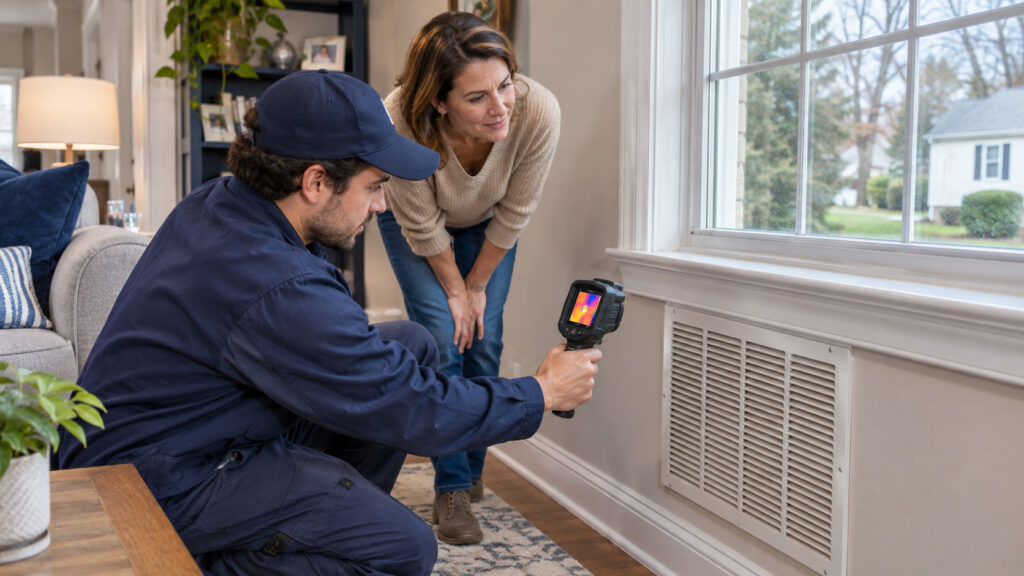
An infrared camera shows surface temperature differences. A thermal scan may help locate missing insulation or air movement. Weather conditions can affect how clearly those differences appear.
The images require interpretation. A cold patch does not prove a wall contains mold, and a scan does not replace a moisture assessment. Ask what evidence supports each recommendation.
What Can an Audit Reveal About Your HVAC System?
A heater can produce enough heat at the unit, yet fail to deliver comfort to a room. Air leaks and weak insulation can increase the work the equipment must do. Duct problems can limit heat delivery.
The audit helps identify which part of the house deserves attention. Equipment diagnosis may still require a separate technician. The following patterns are clues, not final diagnoses.
| Comfort Problem | What the Audit Checks | What May Need HVAC Service |
| A cold upstairs bedroom | Attic insulation or air leaks | Airflow to that room |
| Long furnace cycles | Heat loss through the house | Output or control faults |
| A humid room in summer | Moisture entry or ventilation | AC operation |
| Uneven temperatures | Duct leakage or envelope gaps | Air balance |
| High energy use | Household demand or insulation | Equipment performance |
Duct Leakage and Restricted Airflow
Ductwork outside conditioned space can lose heat before it reaches a room. Some assessments include duct leakage tests; others rely on visible inspection. Ask which method the provider uses.
Restricted airflow needs a different response from leakage. A blocked return or unsuitable filter may affect the system even if ducts are sealed. System repairs should address a diagnosed fault rather than follow automatically from a draft complaint.
Equipment Size and the Home’s Heat Demand
A bigger furnace does not solve every cold room. Equipment selection should reflect the home’s heat loss. An oversized unit may cycle too often without correcting an insulation gap.
Tell the installer about planned air sealing or insulation work before equipment selection. Those changes may reduce the load. Ask for a load calculation that reflects the improvements. A replacement assessment should account for planned improvements instead of copying the old unit’s capacity.
Water Heat and Ventilation
A whole-home review may also examine the water heater. This matters when hot-water use accounts for a noticeable share of household energy. Appliance condition and household demand both affect the result.
Air sealing also changes how outside air enters the home. Ask whether the scope includes carbon monoxide checks or a combustion safety assessment. Ventilation needs should form part of the plan before gaps are sealed.
Energy Audit vs HVAC Inspection: Which Comes First?
The best first appointment depends on the complaint. An audit addresses whole-home performance. An equipment visit focuses on a specific unit or its controls.
| What’s Happening? | Where to Start |
| The furnace suddenly stopped | Arrange equipment diagnosis |
| Several rooms have long-term comfort problems | Consider a whole-home audit |
| You plan insulation and new equipment | Coordinate an audit with system design |
| The unit makes a new mechanical noise | Request an HVAC inspection |
| Utility use rose without a clear cause | Review usage, then select the assessment |
EZ Flow provides heating repair for equipment faults across North Jersey. A certified energy auditor may be a separate provider. Confirm who will perform the audit rather than assume every HVAC contractor offers one.
Can an Online Energy Audit Replace an In-Home Visit?
An online energy audit offers a starting point for a review of household habits. A questionnaire may flag an old appliance or excessive hot-water use. It can provide an easy starting point before a visit.
A virtual review cannot perform a blower door test. It also cannot verify hidden insulation conditions through a questionnaire alone. Treat its savings estimates as projections based on the information submitted.
Some utility programs offer a smart thermostat or water-saving products after an online quiz. Availability depends on the utility and service address. A program advertised in another state does not establish eligibility for a North Jersey household.
How Should You Prepare for an Audit?
Before the visit, make a short list of the rooms that feel uncomfortable. Clear access to the areas the assessor needs. A record of when each problem occurs is more useful than a guess about its cause.
- Gather energy records: Include oil delivery records for a home that uses heating oil.
- Note comfort patterns: Record which room feels cold and when it happens.
- Explain recent changes: Mention new windows or an addition.
- Clear access safely: Ask which attic or basement areas the assessor needs.
- Describe moisture concerns: Share visible condensation or recurring dampness.
Avoid changes that hide the normal pattern before the visit. Mention a recent filter replacement or thermostat schedule change. Accurate context helps the assessor interpret what the tests show.
What Affects the Cost and Potential Savings?
The audit scope affects the fee. A detailed visit with diagnostic tests differs from a short walkthrough. House size and access can also affect the work.
Ask whether the fee includes a written report. Confirm whether a follow-up test comes with later improvements. A low initial fee offers little value if the findings remain unclear.
Savings depend on which improvements go ahead. Actual results also depend on weather and household habits. An audit alone does not reduce energy use, and an estimate does not guarantee a lower bill.
For a home energy audit in New Jersey, check the utility’s current options. PSE&G program details explain its whole-home assessment route and participating contractors. Eligibility must be checked before work starts.
Ask whether approval must come before installation. Keep the report and project paperwork together. Do not assume an incentive offered by one utility applies to another account.
What Should You Do with the Report?
A useful report should make the next step clearer. Separate urgent safety findings from comfort improvements. Then ask which proposed changes depend on each other.
- Request evidence: Ask for measurements behind the recommendation.
- Set the order: Complete relevant envelope work before final equipment selection.
- Separate work scopes: Keep HVAC repairs distinct from insulation upgrades.
- Check the outcome: Ask how completed work will be verified.
If the report calls for seasonal equipment care, heating maintenance can address the applicable service tasks. If it identifies an insulation gap, a furnace repair alone will not close that gap.
Turn the Findings into a Useful HVAC Plan
A home energy audit earns its value when the results lead to a clear decision. Keep sound equipment when it still meets the home’s needs, and address measured defects before a replacement choice. EZ Flow’s family-owned team serves Bergen County and Passaic County. Its HVAC service area in NJ also includes Morris County and Essex County. Discuss the HVAC findings and request an assessment of the equipment work your home needs.
Frequently Asked Questions
How Long Does a Home Energy Audit Take?
A detailed audit often takes a few hours. The scope and size of the home affect the time needed.
Is an Energy Audit the Same as a Home Inspection?
An energy audit focuses on energy use and comfort. A general home inspection has a broader purpose and may not include energy tests.
Can an Audit Prove My Furnace Needs Replacement?
An audit can flag performance concerns. A qualified technician should confirm the equipment fault and assess replacement options.
Is Spring the Best Time for an Audit?
Spring can be useful before summer demand. The best timing also depends on the project schedule and the conditions needed for diagnostic tests.
Should I Ask for a BPI-Certified Auditor?
BPI offers relevant professional credentials. Ask about the assessor’s qualifications and confirm any certification the utility program requires.