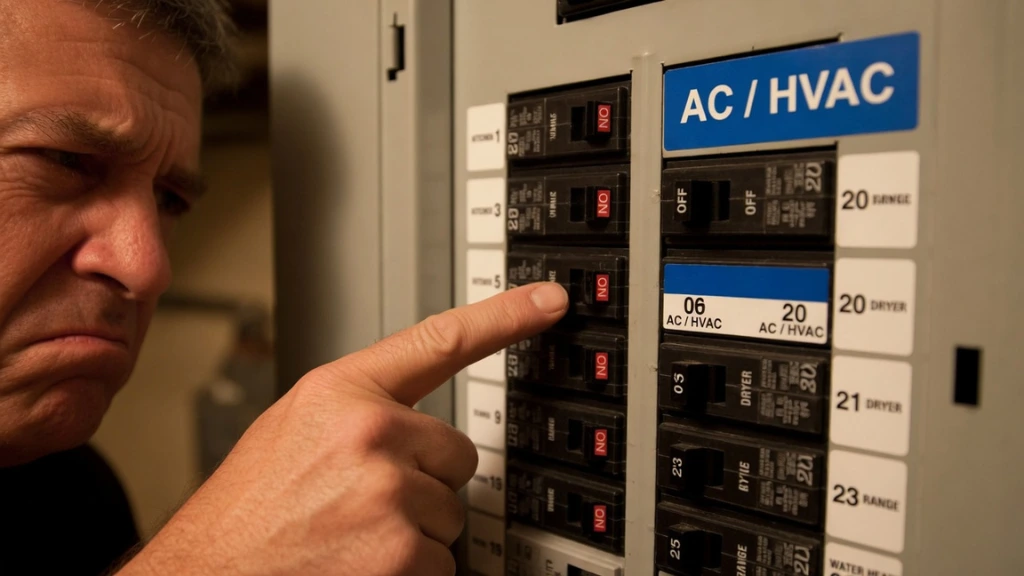
It’s a blistering summer day. Your AC unit kicks on, runs for a few minutes, and suddenly cuts out. You check the breaker panel and see the switch has flipped to OFF.
You reset it, the AC starts again, and it trips once more. If this keeps happening, you’re dealing with a real problem.
What Is Your AC Circuit Breaker?
Your air conditioner’s circuit breaker is a safety device that monitors how much electrical current flows to your unit. Every AC system is designed to handle a specific amount of electricity.
When demand spikes beyond that limit, the breaker automatically trips to cut off power. This protects your wiring from overheating and prevents electrical fires.
According to the Electrical Safety Foundation International, home electrical fires account for an estimated 51,000 fires each year in the United States. Your circuit breaker is literally standing guard against that risk.
If your breaker trips, it’s doing its job. The real question is why it needs to trip in the first place.
The Most Common Causes
1. Dirty Air Filter
This is the number one reason AC breakers keep tripping, and it’s the easiest to fix yourself. A clogged air filter forces your blower to work much harder to push air through the system.
That extra effort demands more electrical current. Over time, your AC draws too much power and the breaker trips to protect the circuit.
Check: Look at the filter behind your return air grate. If it’s dark gray or brown, it’s blocking airflow and needs replacement.
Fix: Most homeowners can swap a filter in under five minutes. Replace filters every 1 to 3 months during cooling season.
2. Filthy Condenser Coils Outside
Your outdoor AC unit has condenser coils that release heat to the outside air. When these coils get caked with dirt and pollen, they can’t shed heat efficiently.
Your system works harder and harder trying to reach your target temperature. Eventually it pulls extra amps and the breaker trips.
Why not DIY: Improper cleaning can damage the delicate aluminum fins or flatten them, which blocks airflow just as badly as dirt does.
Fix: Schedule professional coil cleaning as part of your annual maintenance. It costs $150 to $300 and prevents this problem.
3. Loose or Corroded Electrical Connections
Sometimes the problem isn’t with your AC unit at all—it’s the wiring or breaker connection itself. Over years of operation, vibration and heat can loosen the wire terminals that connect your AC to the breaker.
Loose connections create resistance, which generates heat and causes the breaker to trip. Corroded wires do the same thing.
Fix: This requires a licensed electrician to safely tighten connections or replace damaged wiring.
4. Worn Compressor or Hard Starting
The compressor is the heart of your air conditioning system. It pressurizes and circulates refrigerant throughout the unit.
As compressors age, they sometimes struggle to start. This “hard starting” condition means the motor pulls excessive amps during startup, and the breaker trips before the unit even gets running.
Fix: You might need a hard start kit (a capacitor that gives extra electrical boost), or the compressor might need replacement. In older units, replacing the entire outdoor unit could be more cost-effective.
5. Electrical Short in Motor or Wiring
If an AC motor runs hot for extended periods, the insulation around the wires inside can break down and melt. This creates an electrical short that causes sudden, excessive current flow.
The breaker trips to prevent a fire. Watch for burning smells, visible scorch marks, or melted insulation.
Important: Do not keep resetting the breaker if you suspect a short. This is a serious fire hazard.
Warning Signs You Need Help Now
Burning smells or smoke. Turn off the unit, shut off the breaker, and call for emergency service immediately. These are signs your system needs urgent attention.
Frequent tripping. One trip every few years might be a fluke. Multiple trips in a week means something is wrong.
Strange noises. Clicking, buzzing, or clanging when the AC starts can indicate electrical problems or mechanical failure.
Breaker won’t reset. If it resets but immediately trips again, the problem is still active and dangerous.
Higher electric bills. If your AC is pulling extra current, your usage spikes noticeably without explanation.
Weak airflow or inconsistent cooling. This can point to airflow restriction or a failing compressor.
DIY Troubleshooting Steps
Step 1: Check Your Air Filter
Locate your return air filter (usually in a wall-mounted grate, attic, or basement). If it’s visibly dirty, pop in a new one rated for your system.
This solves the problem in many cases and takes five minutes.
Step 2: Clean the Outdoor Unit
Walk outside and look at the condenser coil area. If it’s covered in dirt, leaves, or dead grass, gently rinse it with a hose on low pressure.
Don’t use high pressure—it can damage fins. Move any shrubs or clear debris blocking airflow around the unit.
Step 3: Hard Reset the Breaker
Go to your breaker panel and find the double-pole breaker labeled AC or HVAC. Switch it fully to OFF and wait 30 minutes to let internal components cool and reset.
Then switch it back to ON, return to your thermostat, set it to COOL, and see if the AC starts normally.
Step 4: Test for 15 Minutes
Run the unit for a few minutes on a moderate setting. Don’t fire it up full blast on a hot day.
If the breaker holds steady for 15 minutes without tripping, the hard reset likely worked. If it trips again, stop and call a professional.
When to Call a Professional
Call an HVAC technician right away if the breaker trips again within minutes of reset. If you smell burning or see smoke, you need emergency service.
If you’ve checked and replaced the filter and it didn’t help, or if the outdoor unit is extremely dirty or physically damaged, call a pro. Unusual noises, a breaker that won’t stay ON, or any sign of an electrical short means you need a licensed tech.
Prevention Through Regular Maintenance
The best way to avoid repeated breaker trips is to catch small problems before they become big ones. Schedule annual AC maintenance in spring, before cooling season hits hard.
A trained technician will check all electrical connections and tighten any that are loose. They’ll clean condenser coils, replace filters, and test capacitors. When systems are maintained regularly, you catch worn parts long before they cause breaker trips.
Customers often tell us their power bills drop and their units run more quietly after their first maintenance visit. Learn more energy-saving HVAC tips for NJ homeowners to keep your system running efficiently.
Frequently Asked Questions
Is it dangerous to keep resetting my AC breaker?
Yes. Resetting it repeatedly puts stress on your electrical system and increases fire risk. The breaker is doing what it’s supposed to do—find the cause instead of just resetting it.
Can I replace my AC breaker myself?
No. Breaker replacement requires a licensed electrician to safely access your main electrical panel. Improper work can create shock or fire hazards.
How much does it cost to fix an AC breaker that keeps tripping?
If it’s a dirty filter, almost nothing ($20 to $40). Professional coil cleaning runs $150 to $300. Electrical repairs might be $200 to $600. Compressor replacement can be $500 to $3,500+. An HVAC pro can give you an exact quote after diagnosis.
Should I run my AC if the breaker keeps tripping?
Only for brief testing. Don’t run it continuously if the breaker trips repeatedly. This can damage the compressor and increase fire risk.
AC Breaker Tripping in New Jersey
If you’re running your AC in Bergen County, Essex County, Morris County, or Passaic County, the humidity and heat put extra stress on systems. We see a spike in breaker trips during July and August heat waves.
If your home is older and hasn’t had major HVAC work in decades, your original air conditioner may not be sized properly for today’s cooling demands. Older systems also have aging electrical components prone to shorts and connection problems.
New Jersey’s hot, humid summers mean your AC runs longer and harder than in many other parts of the country. If you’re experiencing repeated breaker trips in Clifton, Fairfield, Wayne, Morristown, Secaucus, or Paramus, call us for professional diagnosis.
We have multiple locations and can usually schedule same-day or next-day service. Check out our air conditioning repair and maintenance services to learn more about what we offer.