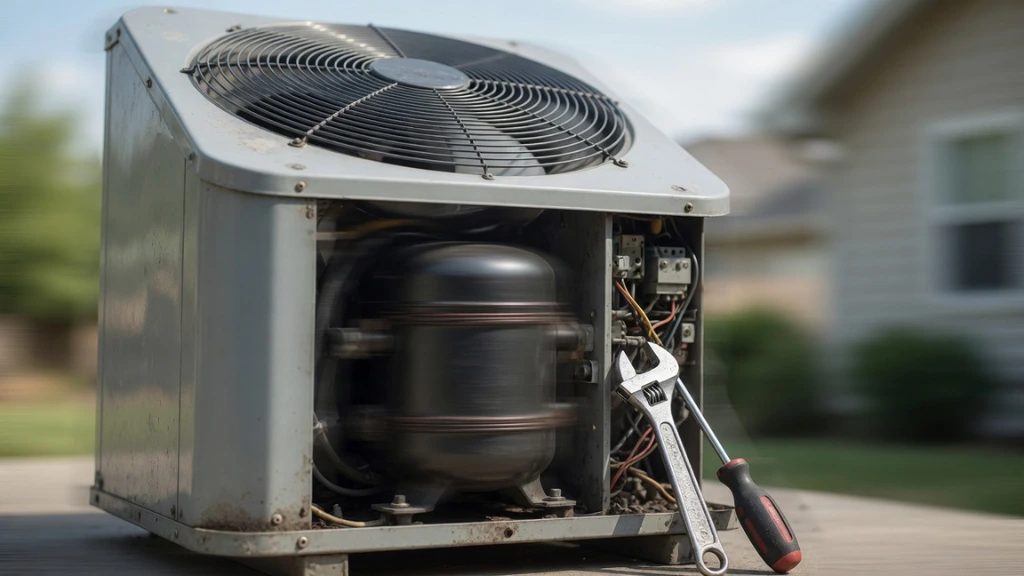
If your air conditioner is talking to you, it’s worth listening. A healthy AC unit runs quietly in the background: a soft hum, a whoosh of air, maybe one click when it starts up. That’s it.
So when an AC making a loud noise turns into the main event in your living room, something has changed. The good news is that most AC noise complaints break down into a handful of recognizable patterns, and once you know what each one sounds like, you know whether to grab a flashlight or grab your phone.
This guide walks through the most common reasons an air conditioner making loud noise problem shows up, what’s usually behind it, and when it’s smart to stop troubleshooting and call a technician.
Normal AC Sounds vs. a Noisy AC Unit
Not every sound is a red flag. Here’s the baseline.
Normal:
- A steady, low hum from the outdoor unit
- One click when the system turns on or off
- A soft rush of air from the vents
Not normal:
- Banging, clanking, or grinding
- A high-pitched squeal
- Hissing or bubbling near the indoor unit
- Buzzing that doesn’t stop
- Rattling that gets louder as the system runs
- Whistling through the vents
If you’re dealing with any of the sounds in that second list, here’s what’s probably going on.
1. Banging or Clanking
A hard metallic bang usually means something has come loose inside the unit, often a bolt, a connecting rod, or a piston pin in the compressor. Sometimes it’s a blower wheel that’s knocked out of balance and hitting the housing on every rotation.
This is one case where waiting costs you. A loose part that’s allowed to keep moving tends to chip or crack something else nearby, and a simple part swap can turn into a compressor job.
What to do: Shut the unit off and call for service. Don’t run it to “see if it goes away.”
2. Buzzing: Electrical Issue or Debris
An air conditioner making loud noise in the form of a buzz is one of the more common calls HVAC companies get, and there are a few usual suspects: a failing capacitor, a worn-out contactor relay, a loose wire, or something physical caught in the fan.
That last one is more common than people expect. Outdoor units sit exposed all year, and it’s not unusual to find a fallen branch, a wad of leaves, or even a small animal’s nesting material packed into the fan housing, especially the first warm week after winter.
Quick check: Power down the unit and look inside the outdoor cabinet for obvious debris. Clear anything you can see safely. If the buzzing returns once you turn it back on, stop there. A failing capacitor or bad wiring left alone can eventually damage the compressor or, in rarer cases, create a fire risk.
3. Squealing or Screeching: Fan Motor or Belt
A sharp squeal, usually right when the unit kicks on, tends to trace back to a fan motor with worn bearings, a belt that’s slipping, or a blower wheel bearing on its way out.
This kind of noise rarely gets better on its own and often gets worse within days or weeks. If the motor seizes completely, you lose cooling entirely, and the repair bill is bigger than if you’d caught it at the squeal stage.
What to do: Turn the system off and schedule a repair visit. Motor and bearing issues are usually diagnosed quickly and, in a lot of cases, fixed the same day.
4. Hissing or Bubbling: Refrigerant Leak
This is the noise on this list worth taking most seriously.
A steady hiss near the indoor coil or refrigerant lines is often refrigerant escaping through a small crack or pinhole. A bigger leak can sound more like bubbling or gurgling as pressurized gas pushes out.
Other signs that tend to show up alongside it:
- Weak or warm air from the vents
- Ice forming on the refrigerant line or outdoor coil
- The house feeling more humid than it should
- An energy bill that’s crept up without an obvious reason
Refrigerant work isn’t a DIY job in the United States. Under Section 608 of the Clean Air Act, anyone who services equipment containing regulated refrigerants has to hold EPA certification, which means passing an approved exam before they’re allowed to add or remove refrigerant from a system. Running a unit with a known leak can also burn out the compressor, turning a repair into a full replacement.
What to do: Turn off the AC, open a window if you notice any odd smell, and call a licensed technician. EZ Flow’s air conditioning technicians are certified to locate the leak, repair it, and recharge the system properly.
5. Rattling: Loose Panels or Worn Parts
Rattling, especially from the outdoor unit, is usually mechanical rather than electrical. Vibration works screws and panels loose over months and years, or worn internal parts start to shake more than they should.
Quick check: Power the unit off and look for any visibly loose panel or screw. Tighten what you find. If the rattle is coming from inside the cabinet, or it’s back within a day of tightening things up, that’s worth a technician’s eyes.
6. Whistling or Wheezing From the Vents
A thin whistle coming through the vents almost always points to restricted airflow somewhere in the system: a clogged filter, closed or blocked registers, or a gap in the ductwork.
Start here: Pull your air filter and check it. If it’s gray and matted, replace it. Walk the house and make sure furniture or rugs aren’t blocking vents. If the whistle is still there after that, the issue may be in the ducts themselves.
This is worth taking seriously beyond the noise. ENERGY STAR estimates that a typical house loses 20 to 30 percent of the air moving through its duct system to leaks, holes, and poorly connected ductwork, which shows up as higher bills and rooms that never quite reach the temperature you set. Our energy-saving HVAC tips for NJ homeowners covers filter changes and duct upkeep in more detail if you want to get ahead of it, and our full lineup of heating and cooling services covers everything from tune-ups to full system replacements.
Noisy AC Unit: Quick Reference Table
| Sound | Likely Cause | DIY Check or Call a Pro? |
| Banging / Clanking | Loose or broken internal part | Call a pro right away |
| Buzzing | Electrical fault or debris in unit | Check for debris; call if it continues |
| Squealing / Screeching | Worn fan motor or belt | Call a pro |
| Hissing / Bubbling | Refrigerant leak | Shut off system; call a pro immediately |
| Rattling | Loose panels or worn parts | Check and tighten; call if it persists |
| Whistling | Clogged filter or duct leak | Change filter first, then check ducts |
My AC Makes a Loud Noise When It Turns On — Does That Matter?
Yes, and the timing is actually a useful clue. A squeal or a bang that happens specifically at startup usually points to a component under the most mechanical stress at that moment, like a fan motor spinning up or a compressor kicking in. If the noise is loudest at startup and fades once the system is running, that’s still worth a service call, but it narrows down what a technician will check first.
When to Stop Troubleshooting and Just Call
Some situations don’t call for a wait-and-see approach:
- Any burning or electrical smell with the noise
- Hissing that continues even with the unit powered off
- A loud screech right at startup that doesn’t fade
- Banging that seems to come from inside the compressor housing
These tend to get more expensive the longer they run, and with refrigerant and electrical problems specifically, there’s a real safety angle that makes guessing a bad idea.
A Note From the Field
Not every noisy AC unit call ends in a big repair. A fair number of the buzzing and rattling complaints we see turn out to be a stick or a plastic bag caught in the outdoor fan, something a homeowner could have cleared in five minutes if they’d known to look. It’s always worth a quick visual check before assuming the worst, just make sure the power is off first.
Conclusion
Most AC noises fall into one of these six patterns, and the sound itself usually tells you how urgent the fix is. A rattle or whistle might wait a day, but hissing, banging, or a screech at startup shouldn’t. When in doubt, shut the unit off and get a professional opinion rather than guessing. It’s a lot cheaper than finding out the hard way.
EZ Flow Covers Bergen, Essex, Morris, and Passaic Counties
If your AC is making a loud noise and you’re not sure which category it falls into, that’s exactly what a diagnostic visit is for. EZ Flow serves Clifton, Wayne, Morristown, Paramus, Fairfield, and Secaucus, and we can typically get a technician to your door within 45 minutes.
Our team services and repairs all major brands, including Carrier, Lennox, Rheem, Ruud, Goodman, York, and American Standard.
Request a service call or reach us anytime at (973) 337-1200.
If you’d rather catch problems before they turn into a loud AC unit at 8pm on a July weekend, our seasonal maintenance visits check belts, motors, and refrigerant levels before they become a same-day call. And if you’re weighing whether a ductless setup might sidestep some of these duct-related noise issues, we broke that down in why choose a ductless A/C system for your NJ home.